
Technically, functional medicine is just a personalized, integrative approach to healthcare. It involves the prevention, the management, and knowing the root causes of a complex chronic disease. Depending on where you look up functional medicine, you may come across that it is a pseudoscience and that the methods are unproven or disproven. Wikipedia even uses the word quackery, which means health fraud or the promotion of fraudulent or ignorant medical practices. However, functional medicine includes so many things that it is very hard to believe that it is quackery or pseudoscience.
An example of functional medicine is acupuncture, massage, chiropractic medicine, and osteopathic medicine. Let’s look at osteopathic medicine since it is included. This is an entire subsection of doctors (actual doctors). When you choose to go to medical school, you go to a medical school that either awards you an MD or a DO. A doctor with DO after their name as opposed to MD is not any less of a doctor. As a matter of fact, the only difference is osteopathic doctors use the approach to treat the “whole person” as opposed to just the symptoms. They still provide all of the benefits of modern medicine including prescription drugs, surgery, and the use of technology to diagnose disease and evaluate injury. They also put a focus on preventative health care to help patients develop attitudes and lifestyles that do not just fight illness but help prevent it as well. Doctors of Osteopathic Medicine practice in all medical specialties, such as pediatrics, emergency medicine, and surgery, not just primary care. Furthermore, DOs hold some of the most prominent positions in medicine today, including care for the President of the United States, the NASA medical team, Olympic athletes, and more. So, let me ask you… do you choose a doctor based on the two letters behind their name? I don’t, I choose a doctor based on reviews, a referral, and then I make the decision myself on whether I like the doctor and want to return. So, why would anyone describe functional medicine as quackery, pseudoscience, unproven, or disproven.
Now I am going to discuss the statement that the methods are disproven or unproven. This is completely inaccurate. There is a plethora of information out there along with proven medical studies. PLoS One, one of the biggest research journals out there, just published an article on the impact of functional medicine on patient-reported outcomes in inflammatory arthritis.1 Results in this study showed that there was a statistically significant reduction in pain in patients with both rheumatoid and psoriatic arthritis and conclusions showed that functional medicine may have an important role in therapy and treatment to improve patients’ pain, physical and mental health for those that are not seeing an improvement with conventional medicine alone.1 If you remember from my path to diagnosis series, I specifically stated that I am not saying that anyone should go off of their conventional meds or even use functional medicine alone; however, if there can be an improvement in symptoms from a natural pathway, why not try it. I understand that there are medical fads out there and there are definitely proven and unproven “natural” remedies, but when I am discussing functional medicine, I am discussing proven diets, proven supplements, and proven vitamins. It goes back to the discussion on autoimmune diseases and the inflammatory process, in theory, if we can reduce the inflammation, it will reduce the symptoms of autoimmune diseases. So, is this functional medicine or is it basically just personalized medicine?
What about the efficacy of diet in treatment of chronic illnesses? A study looked at whether the autoimmune protocol diet was effective as an intervention for Hashimoto’s Thyroiditis.2 Hashimoto’s thyroiditis is an autoimmune disorder that affects the thyroid gland and is the most common cause of hypothyroidism in the United States. However, even with advances in medicine and medical management with thyroid hormone replacement, most individuals that have Hashimoto’s thyroiditis experience symptoms and have a very impaired quality of life. Therefore, this study was done to see if using functional medicine (in this case, diet) could improve the quality of life in these patients. Results showed that there was a statistically significant improvement in health related quality of life including improvements in physical role functioning, emotional role functioning, vitality, and general health.2 Additionally, their clinical symptom burden decreased significantly and while there was no significant changes to the thyroid function specifically, there was a significant decrease in inflammation.2 So, while there was not a significant change in thyroid function or thyroid antibodies, the study does suggest that a diet and lifestyle program could significantly improve not just quality of life, but also a decrease in systemic inflammation and markers of immune activity.2 This is the one of the biggest parts of functional medicine – basically food is medicine!
One of the best parts of functional medicine is that it is a personalized approach. It is different for each and every patient. The most important part of functional medicine is understanding all of the things that may be interacting in your body that would normally seem unrelated.3 One of the most prominent medical health centers – The Cleveland Clinic – has a center for functional medicine. They take a patient-centered approach to chronic disease management by seeking to answer the question “Why are you ill?” If they can answer this question, you will be able to receive personalized and effective care that will fit your needs specifically. Their functional medicine providers use information from you to gather information about your medical history so that they may be able to identify the root causes of your illness. These causes are not always bacterial or viral in nature. Sometimes, our illnesses include triggers from poor nutrition, stress, toxins, and allergens and once those triggers are identified, a healthy living plan can be customized. Basically, the entire goal of functional medicine is to use nutrition along with lifestyle and behavioral interventions to take charge of your health.
Functional medicine has been shown to benefit chronic conditions such as adrenal disorders, Alzheimer’s and dementia, arthritis, asthma, autoimmune diseases, cancer prevention, cardiovascular disease, diabetes, digestive disorders, fibromyalgia, environmental and food allergies, women’s health disorders such as PMS, menopause, and polycystic ovary syndrome, metabolic syndrome, prediabetes, insulin resistance, thyroid disorders, and mental health disorders.
If diet, exercise, and lifestyle changes can help lead an overall better quality of life, is that a bad thing?
- Droz, N., Hanaway, P., Hyman, M., Jin, Y., Beidelschies, M., & Husni, M.E. (2020). The impact of functional medicine on patient-reported outcomes in inflammatory arthritis: A retrospective study. PLoS One, 15(10). https://doi.org/10.1371/journal.pone.0240416
- Abbott, R.D., Sadowski, A., & Alt, A.G. (2019). Efficacy of the Autoimmune Protocol Diet as Part of a Multi-Disciplinary, supported lifestyle intervention for Hashimoto’s Thyroiditis. Cureus, 11(4). https://doi.org/10.7759/cureus.4556
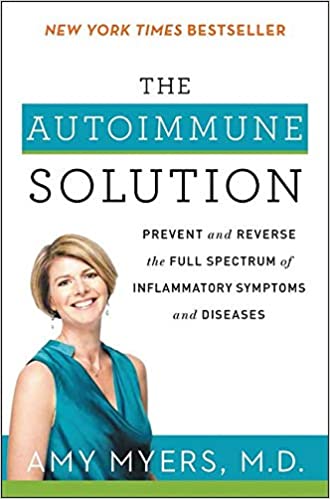
- Myers, A. (2015). The Autoimmune Solution: Prevent and reverse the full spectrum of inflammatory symptoms and diseases. Harper Collins.


 the autoimmune professor
Leave a comment